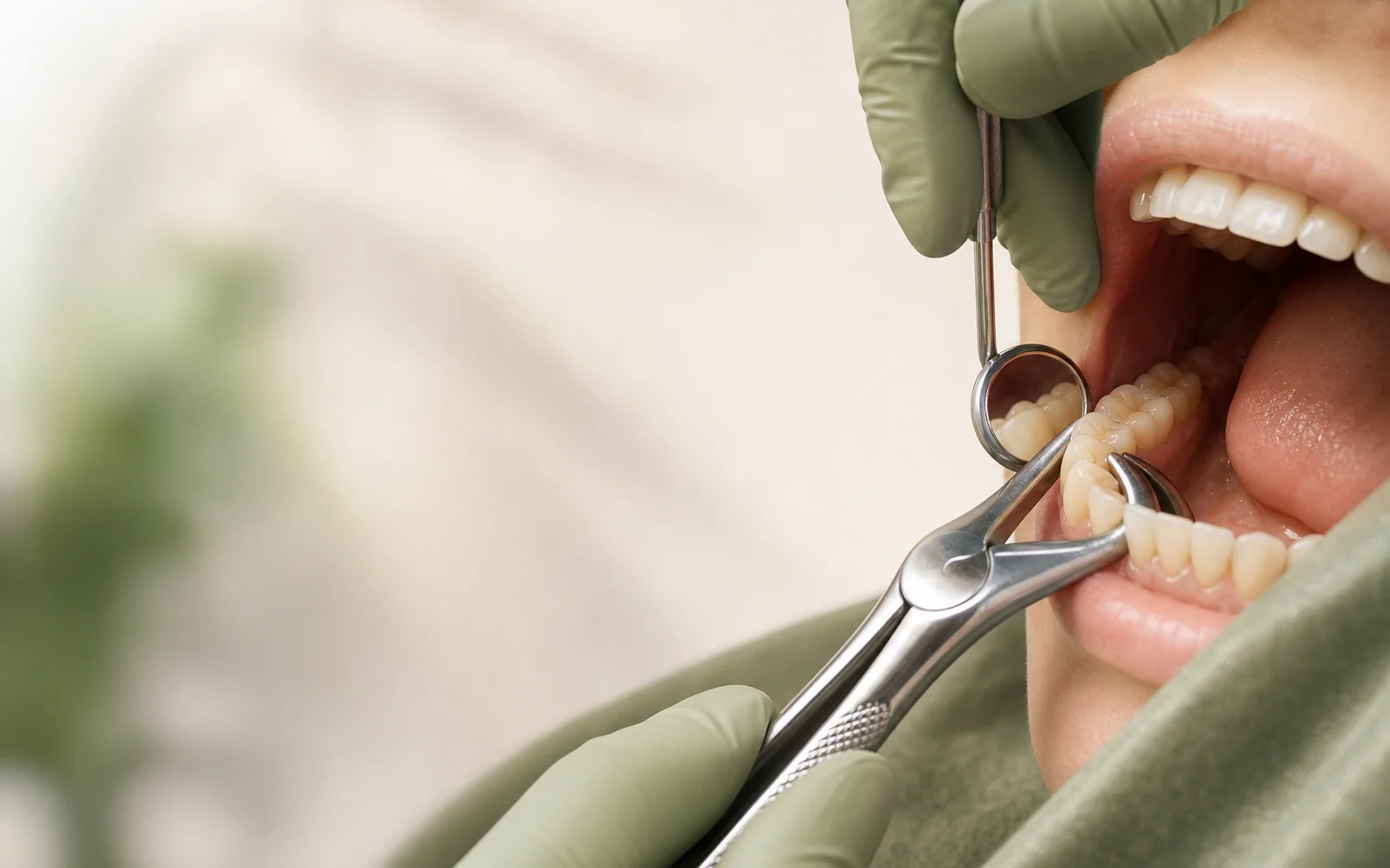
Consultation and X-ray
We examine the tooth, discuss your medical history and any medication you take, and the X-ray shows us the shape of the roots and their relationship with the surrounding structures.
Tooth extraction carried out with care for the bone and the neighbouring teeth, so you keep good conditions if you later choose an implant or a bridge. We explain each step before we begin.
Tooth extraction is the procedure through which a tooth that can no longer be treated is removed from its socket, under local anaesthetic. The decision follows a consultation and an X-ray, not a first impression.
It can be simple, when the tooth is visible and accessible, or surgical, when the tooth is broken below the gum line, impacted or partly covered by bone, as often happens with wisdom teeth.
A tooth with extensive infection keeps the pain going and can affect the surrounding bone. When root canal treatment is no longer an option, extraction stops the problem at its source.
An impacted wisdom tooth or a tooth broken below the gum line can push against, damage or infect the tooth next to it. Removing it reduces that risk.
A socket cared for properly after extraction keeps your replacement options open, whether you later choose an implant, a bridge or a denture.
Healing varies with the tooth removed, the condition of the bone and gum, smoking, and how closely you follow the aftercare instructions in the first few days.
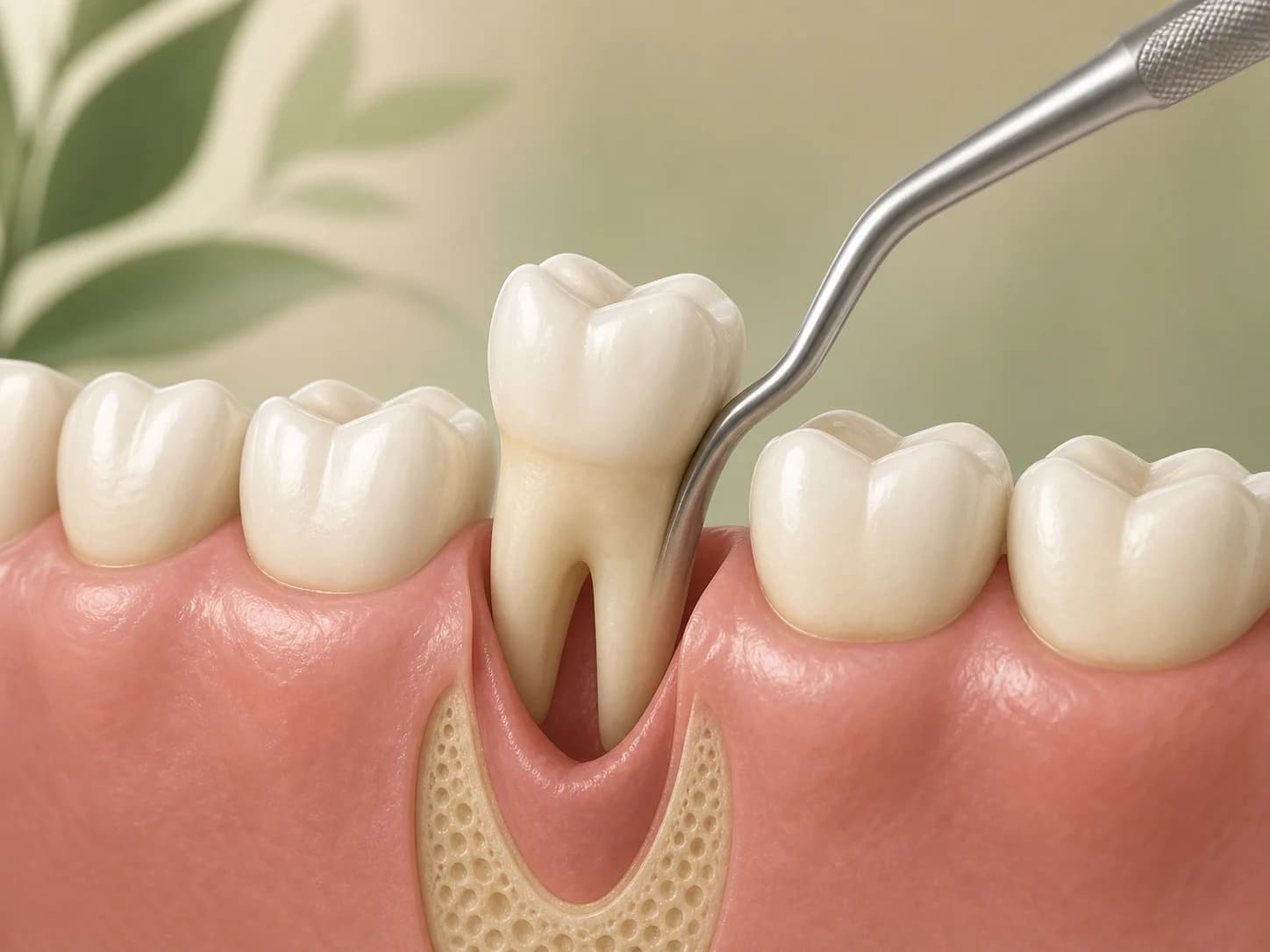
The tooth is intact and accessible above the gum line, and the root allows removal without an incision. It is carried out under local anaesthetic in a single appointment, and the socket usually heals within a few days.
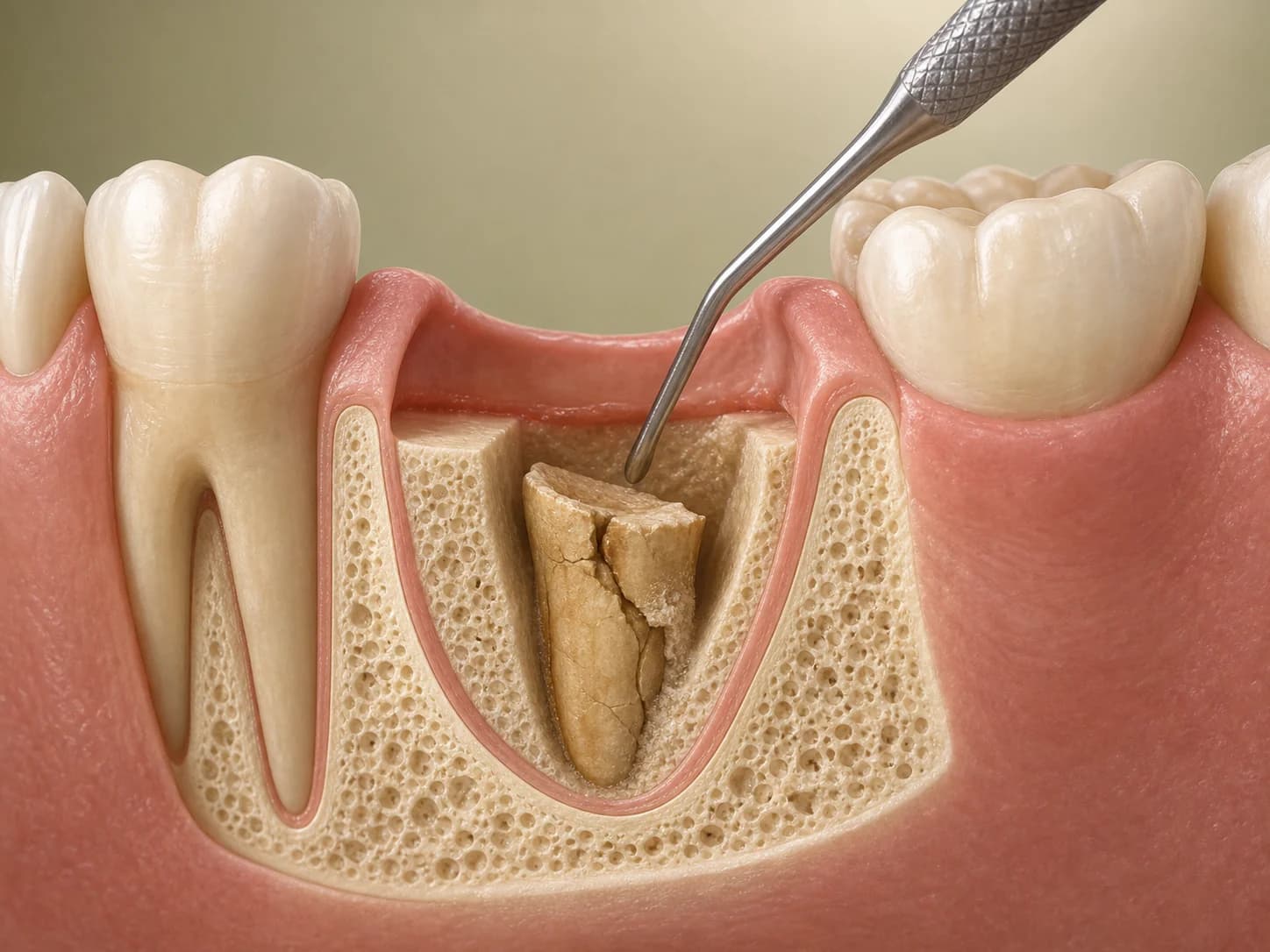
When the tooth is broken below the gum line or the root remains covered by bone, the procedure involves a small incision and stitches. It takes longer, and discomfort in the first few days is usually more noticeable than after a simple extraction.
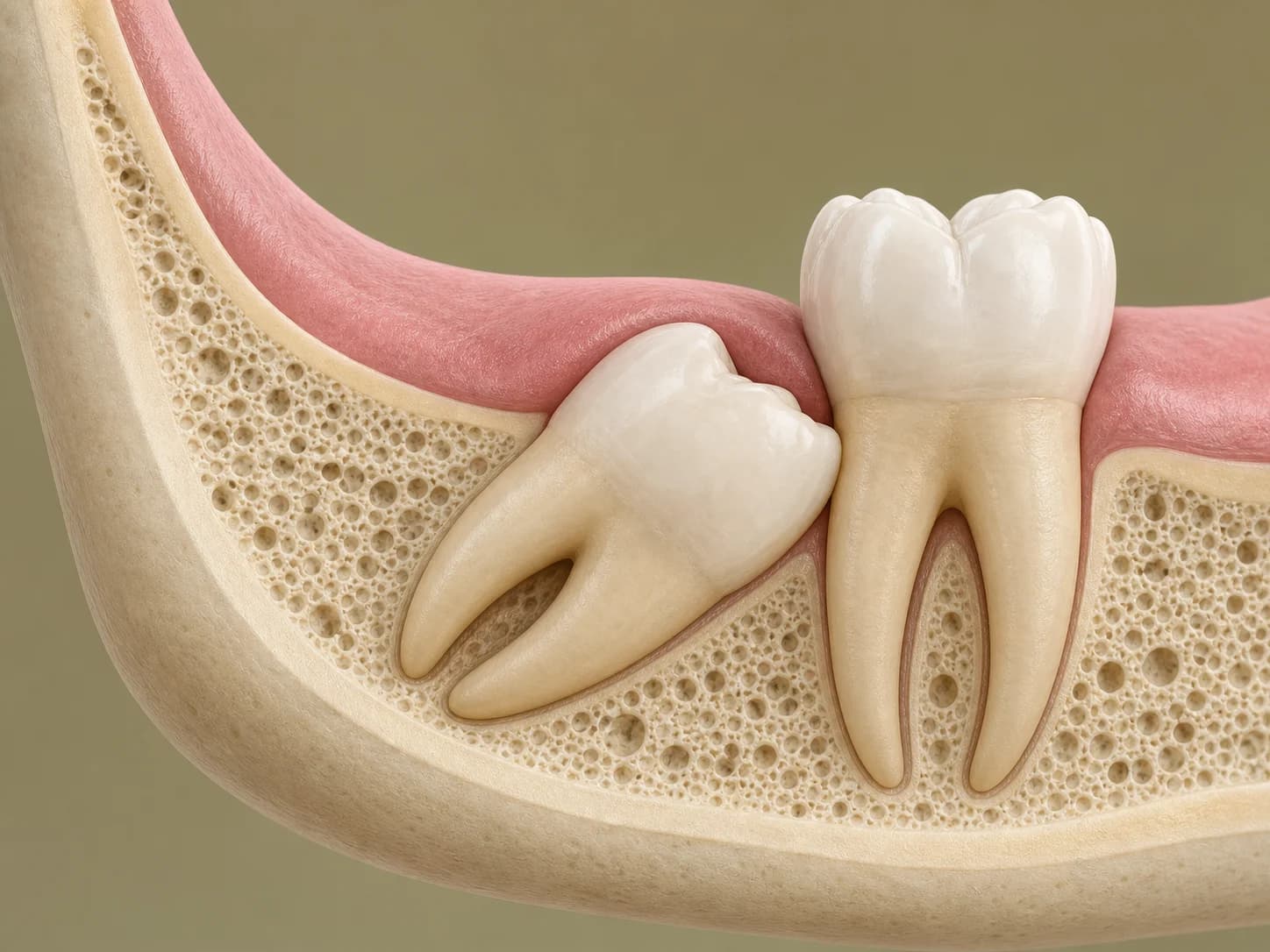
An impacted or partly erupted wisdom tooth can keep the gum inflamed and can damage the tooth beside it. The decision is based on the X-ray, taking into account the position of the roots and their relationship with the surrounding structures.
SIX CLEAR STAGES
The stages are set after the clinical examination and the X-ray. The timeline differs between a simple and a surgical extraction, and healing depends on the bone, the gum and how closely you follow the aftercare instructions.
We examine the tooth, discuss your medical history and any medication you take, and the X-ray shows us the shape of the roots and their relationship with the surrounding structures.
We explain why the tooth can no longer be saved and, if another treatment option still exists, we discuss it before going any further.
We numb the area and wait for the anaesthetic to take full effect. We check together that it has worked before starting the procedure.
The tooth is loosened and removed from the socket. Surgical extractions involve a small incision, and stitches are placed at the end.
We control the bleeding, clean the socket and give you written instructions for the first 24 hours, along with guidance on eating and oral hygiene.
At the review we check how the area is healing and remove the stitches if any were placed. That is also when we discuss replacement options, based on the bone and the area involved.
The figures below are guide prices and are confirmed in your written quote after the consultation and the X-ray. The final price depends on the type of tooth, the position of the roots and whether the procedure is simple or surgical. The consultation is free.
Guide price for removing a baby tooth. The range goes up to 100 RON, depending on how mobile the tooth is and the condition of the root.
Guide price for removing a permanent tooth that is visible and accessible. The range goes up to 250 RON, depending on the complexity of the case.
Guide price for removing a wisdom tooth. The range goes up to 400 RON, depending on the position of the tooth and how deeply it sits in the bone.
Prices for the procedures linked to an extraction, before and after the appointment. Guide prices vary from case to case; you receive the exact figures in your written quote.
A baby tooth, a permanent tooth and a wisdom tooth start from different prices, because they involve different amounts of time and difficulty in the surgery.
When the tooth is visible and accessible, the procedure is simple. If it is broken below the gum line or covered by bone, an incision and stitches are needed, and the price rises.
Curved, divergent roots, or roots close to important structures, call for more careful work. The X-ray shows this before the procedure, not during it.
An active infection, an inflamed gum or dense bone changes the approach and may add stages that appear separately in your quote.
Surgical extractions are closed with stitches, which are removed at a review. These stages appear separately in your quote when they are needed.
A scale and polish beforehand, a bone graft afterwards or treatment of the neighbouring tooth are costed separately, depending on what the clinical examination shows.
An extraction is a surgical procedure, not a routine step. That is why we start with a clinical examination and an X-ray, so we know in advance the shape of the roots, the condition of the bone and the relationship with the surrounding structures.
We first tell you whether the tooth can still be treated, and only then do we discuss extraction. You receive the explanation in plain language, the costs in writing and the aftercare instructions before you leave the practice.
Each option has its own indications, limits and consequences. This comparison is for guidance only and does not replace a clinical assessment.
The right choice depends on the condition of the tooth, the bone, the gum, your general health and your budget.
Removing a baby tooth starts from 50 RON, a permanent tooth from 150 RON and a wisdom tooth from 250 RON. The final price depends on the type of procedure and is confirmed in your written quote, after the free consultation and the X-ray.
The procedure is carried out under local anaesthetic, so you usually feel pressure rather than pain. We check together that the anaesthetic has taken effect before we begin. Once it wears off, some discomfort can last a few days, and you receive instructions and, if needed, a recommendation for pain relief.
The gum usually closes within one or two weeks, while the bone in the socket remodels over several months. The pace differs from case to case, depending on the type of extraction, smoking, the condition of the gum and how closely you follow the instructions in the first days.
On the first day, choose soft foods that are cool or at room temperature, chewed on the opposite side. Avoid hot drinks, alcohol and drinking through a straw, as these can dislodge the clot from the socket. Return gradually to your usual diet as the area heals.
When it causes repeated inflammation, pain or cavities in the neighbouring tooth, or when there is not enough space for it to erupt properly. The decision is based on the X-ray, not on symptoms alone. A wisdom tooth that has erupted normally and can be cleaned properly does not need removing as a precaution.
Often, yes. A tooth with a deep cavity or an infection at the root can be kept through root canal treatment, if the root and the remaining structure allow it. We check this at the consultation and suggest extraction only when the tooth can no longer be restored to function.
It depends on the area, the condition of the bone and the reason for the extraction. In many cases we wait a few months while the socket heals, and sometimes a bone graft is needed. The right moment is decided on the basis of a follow-up X-ray.
After a simple extraction, most patients return to their usual routine the same day or the next. After a surgical extraction with an incision and stitches, it is better to avoid intense physical effort for 24 to 48 hours. We tell you at the practice what suits your case.
Light bleeding in the first hours is normal. Bite firmly on the sterile gauze for around 30 minutes and avoid rinsing. If the bleeding does not stop, if the pain increases after the third day or if a fever appears, call the practice so we can see you.
After extraction, we plan healing and, where indicated, replacement of the missing tooth.
Call for a free consultation and receive a written treatment plan with all costs included.