
Examining the tooth
We look at the tooth and, if needed, take an X-ray to see how deep the cavity is. That way we know exactly how to treat it and tell you from the start what to expect.
We stop the cavity before it reaches the nerve and rebuild the tooth with a composite filling, colour-matched exactly to your tooth. Quick, under anaesthetic, so you feel no discomfort.
A tooth cavity is damage to the tooth caused by the bacteria in plaque, which turn the sugar in food into acids. Over time, these acids attack the enamel and carve out a hole. Left untreated, the cavity advances deeper into the tooth, all the way to the nerve.
The earlier we catch it, the simpler the treatment. A small cavity is dealt with by a filling in a single visit, pain-free.
A small cavity means cleaning the affected area and placing a composite filling, in a single session. The sooner you come in, the more of your own tooth you keep.
The composite is applied directly to the tooth and colour-matched to its exact shade. Once we've shaped and polished it, the filling blends in with your other teeth, it doesn't show.
Left untreated, a cavity deepens and can reach the nerve, where the pain and the treatment become more complicated. A timely filling stops the process before it gets that far.
Sensitivity to sweet, cold or hot, a dark spot on the tooth, or a small gap you can feel with your tongue. Sometimes a cavity doesn't hurt at all at first, which is why regular check-ups catch it early.
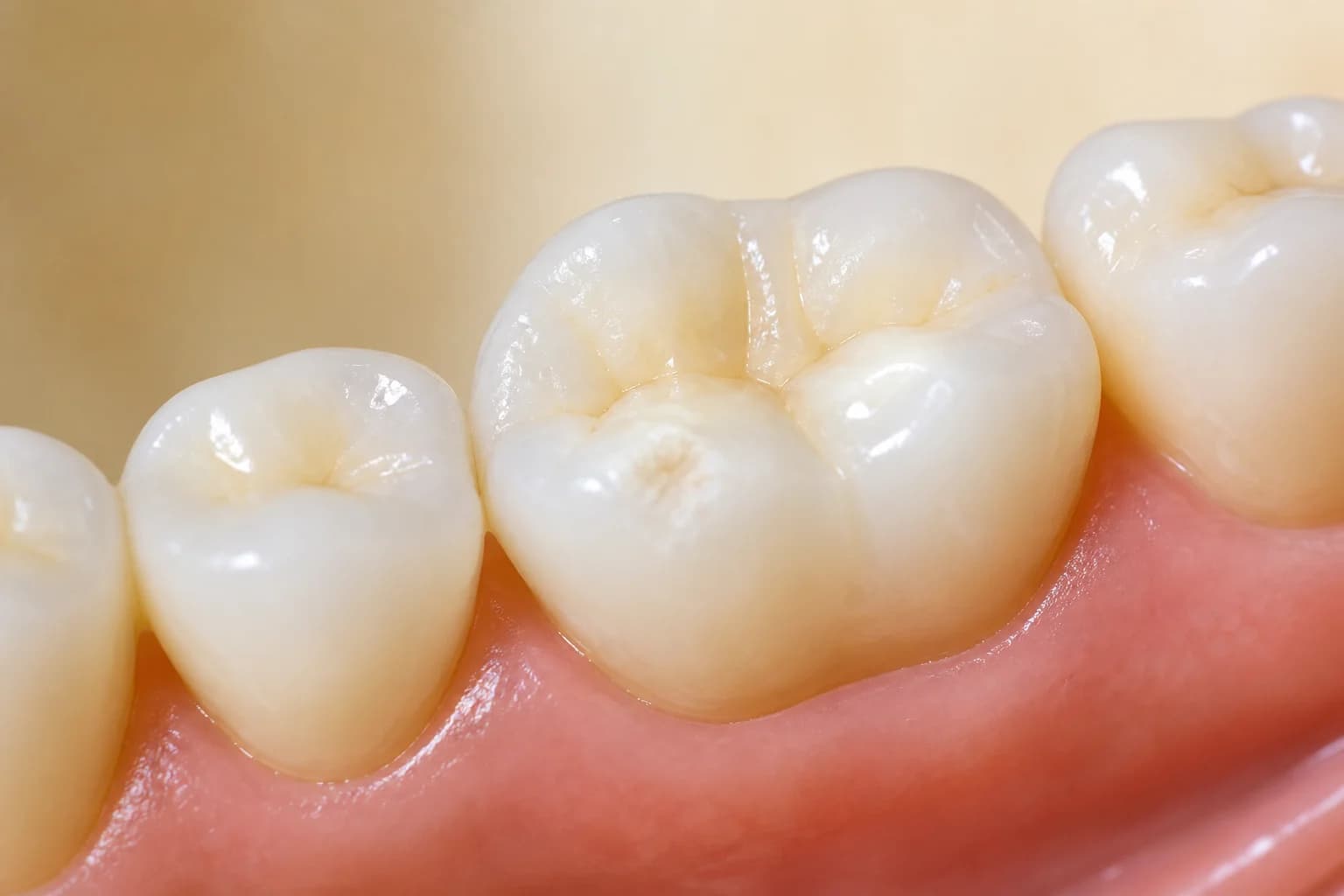
The decay has only just reached the enamel, sometimes just as a spot. At this stage, we clean the area and place a small composite filling, quick and pain-free. Often it doesn't even hurt yet.
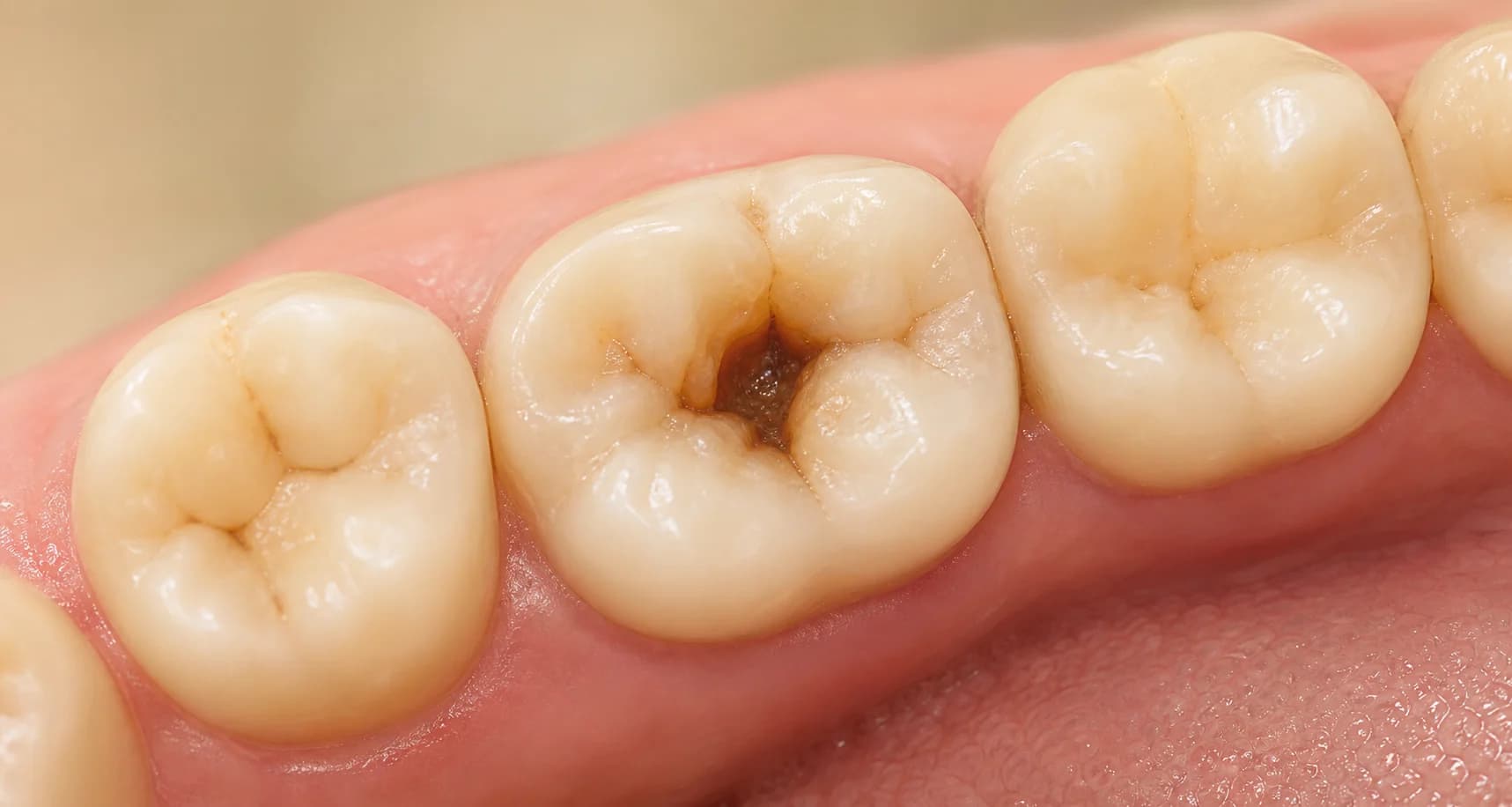
The decay has passed the enamel and reached the dentine beneath. Sensitivity to sweet, cold or hot appears. We clean out the decay and rebuild the tooth with a filling, still in a single session.
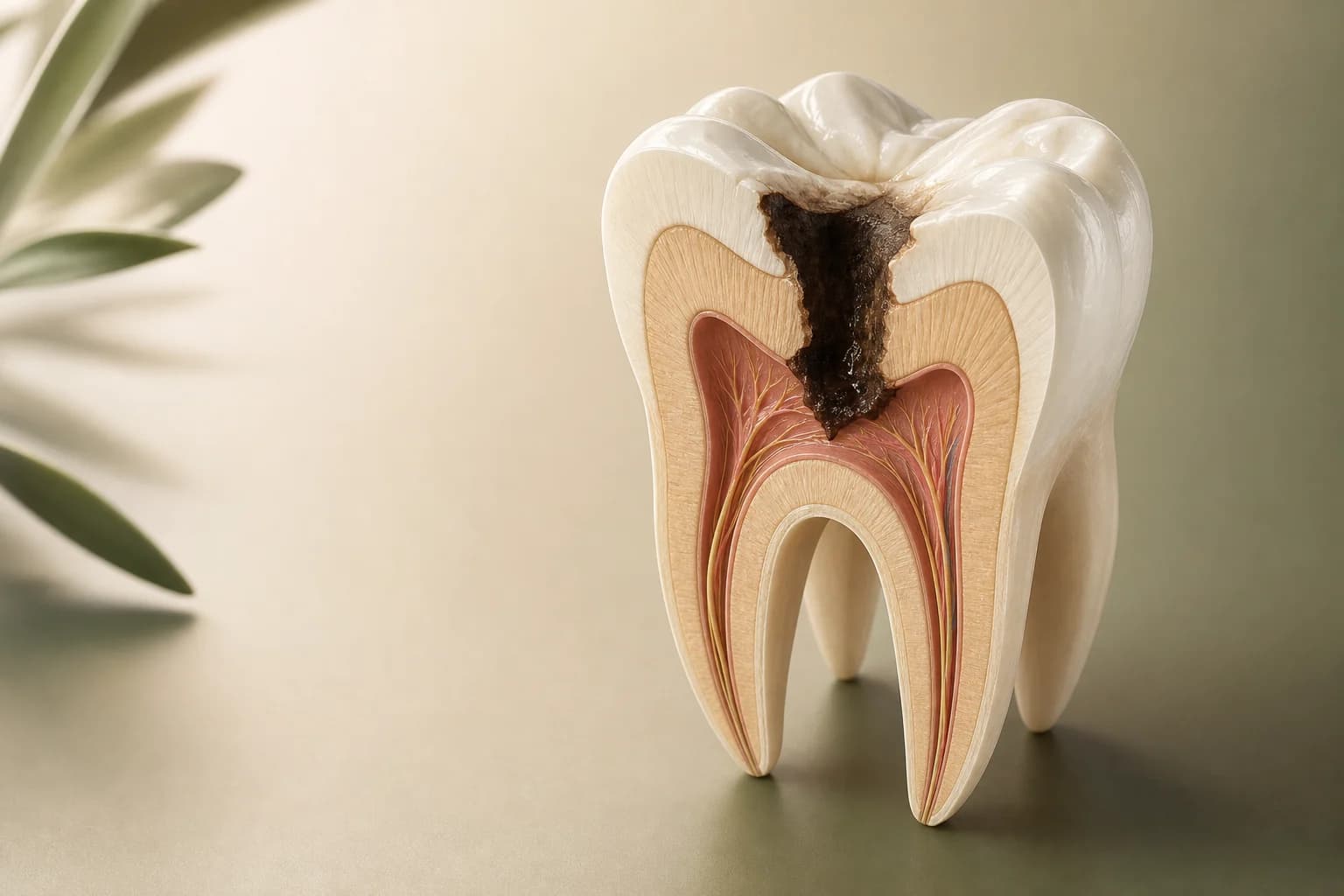
When the decay reaches the tooth's nerve, pain appears, sometimes severe. A filling is no longer enough here, root canal treatment may be needed to save the tooth.
SIMPLE STEPS, NO RUSH
For an ordinary cavity, everything is done in a single session, under anaesthetic, so you feel no pain. Here, step by step, is what happens from the moment you sit in the chair.
We look at the tooth and, if needed, take an X-ray to see how deep the cavity is. That way we know exactly how to treat it and tell you from the start what to expect.
Before we touch the tooth, we numb the area locally. From this point you feel no pain, at most a slight pressure, you can sit back and relax.
We fully clean out the tissue affected by decay, until only healthy tooth remains. This is the step that stops the process and prepares the tooth to be rebuilt.
We rebuild the tooth with composite, layer by layer, colour-matched to its exact shade. We shape it to fit your bite, then harden it with the curing light.
We polish the filling so it's smooth and doesn't show, then check how your bite closes. You leave with the tooth rebuilt, ready to use straight away.
The price depends on how advanced the cavity is. A small cavity is dealt with by a filling; a deep one, reaching the nerve, also needs root canal treatment. The consultation and X-ray are set out separately, in your written quote.
For a cavity that hasn't reached the nerve. We clean out the decay and rebuild the tooth with composite, in a single session, under anaesthetic.
When the decay has reached the nerve, we treat the canal and then rebuild the tooth. We save the tooth instead of losing it.
Prices for the procedures that may come alongside treating a cavity. Amounts vary from case to case; you'll get the exact figures in writing, in your quote.
A small cavity caught early means a simple filling. A deep one, reaching the nerve, needs root canal treatment and costs more. That's why it's important to come in early.
A small cavity, on a single surface of the tooth, needs less material and time than a large one across several surfaces. The bigger it is, the more involved the filling.
When the decay has reached the nerve, the root canal stage is added, removing the nerve and sealing the canal. It's an extra procedure on top of a simple filling and raises the cost.
A back molar, with several canals, takes more time and care than a front tooth. The position and type of tooth affect how long the treatment takes.
After a root canal, some teeth become more fragile and need a crown to protect them. This is a separate stage, which we recommend only when it is called for.
The X-ray, professional cleaning or gum treatment, when needed, all appear in the written quote, with no costs cropping up along the way.
Treating a cavity may seem a minor thing, but how it is done matters: the decay fully cleaned out, the filling shaped correctly and the bite checked at the end make the difference between a tooth that lasts for years and one that sends you back in a few months.
We work under anaesthetic, so you feel no pain, and we explain in advance what needs doing, what it costs and what alternatives you have. No rush, no surprises.
A cavity doesn't stop on its own, it only advances. Here's the difference the timing of your treatment makes. The comparison is for guidance and doesn't replace the clinical assessment.
The best time to treat a cavity is while it's small. A regular check-up catches it early, even when it doesn't hurt.
No. We work under local anaesthetic, so you feel no pain during treatment, at most a slight pressure. We numb the area before touching the tooth. Once the anaesthetic wears off, mild sensitivity may remain for a day or two, which fades on its own.
A filling starts from 150 RON, depending on the size of the cavity. If it has reached the nerve and needs root canal treatment, the price starts from 300 RON. The consultation is free, and you learn the exact cost after the examination.
It shouldn't. We use composite colour-matched to your exact tooth shade, which we shape and polish so it blends in with your other teeth. Once done, a well-made filling is hard to spot, even on front teeth.
A simple cavity is dealt with in a single visit, usually within 30–60 minutes. If it is larger or needs root canal treatment, several sessions may be needed. We tell you from the start how much time is required.
A cavity doesn't stop on its own, it advances into the tooth. Once it reaches the nerve, it causes pain and needs root canal treatment. Left further untreated, it can lead to infection and to losing the tooth. The earlier you catch it, the simpler the treatment.
Common signs are sensitivity to sweet, cold or hot, a dark spot on the tooth, or a small gap you can feel with your tongue. Sometimes a cavity doesn't hurt at all at first, which is why a regular check-up spots it before it advances.
When the decay has passed the outer layers and reached the tooth's nerve. A simple filling is no longer enough, the affected nerve must be treated, otherwise the pain and infection persist. We check with an examination and X-ray whether it is needed.
With the composite used today, the tooth hardens straight away under the curing light, so you can eat shortly after. We just recommend waiting for the anaesthetic to wear off, so you don't accidentally bite your cheek or tongue.
Brushing twice a day, flossing, less sugar and regular check-ups with professional cleaning. A scale and polish removes the plaque your brush misses. Good hygiene is the cheapest and simplest way to avoid cavities.
A deep cavity can sometimes need additional care. We explain every option and include it clearly in your plan.
Call for a free consultation and receive a written treatment plan with all costs included.