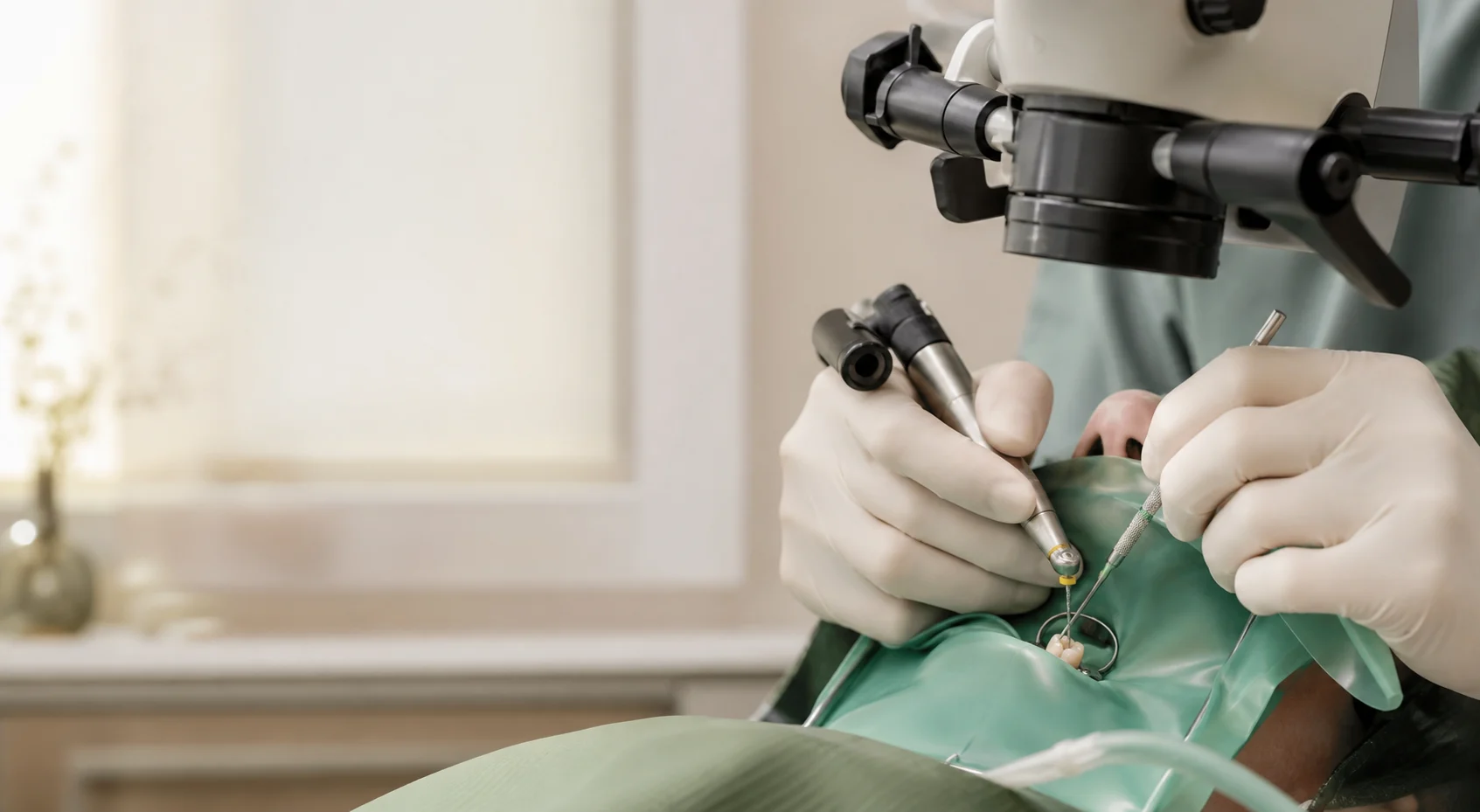
Examination and X-ray
We check the tooth, test its sensitivity and take an X-ray to see the canals and the state of the bone around the root. That's how we determine whether a root canal is needed and how complex the case is.
When decay has reached the nerve and the tooth hurts, we don't pull it straight away, we treat it. We clean out the infected canal, seal it and rebuild the tooth, so you keep it for years to come. All under anaesthetic, pain-free.
Inside every tooth there's a canal containing the nerve and blood vessels. When decay or a crack reaches that far, the nerve becomes inflamed or infected and that's where the pain comes from, sometimes severe and spontaneous.
Root canal treatment means cleaning out this infected space, disinfecting it and sealing it completely, so bacteria can't get back in. The tooth stays where it is, you keep it and carry on using it.
The alternative to a root canal is usually extraction. By treating the canal, you keep your own natural tooth and avoid a gap you'd later have to fill with an implant or a bridge.
The pain comes from the inflamed or infected nerve. Once the canal is cleaned out and sealed, the source is gone and the discomfort settles over the following days.
Root canal treatment's bad reputation comes from the past. Today it's done under local anaesthetic, so you feel no pain during the procedure, for many patients it's comparable to having a filling.
After treatment, the tooth becomes more fragile, especially molars. That's why we rebuild it with a filling and, in some cases, recommend a crown to protect it from cracking.
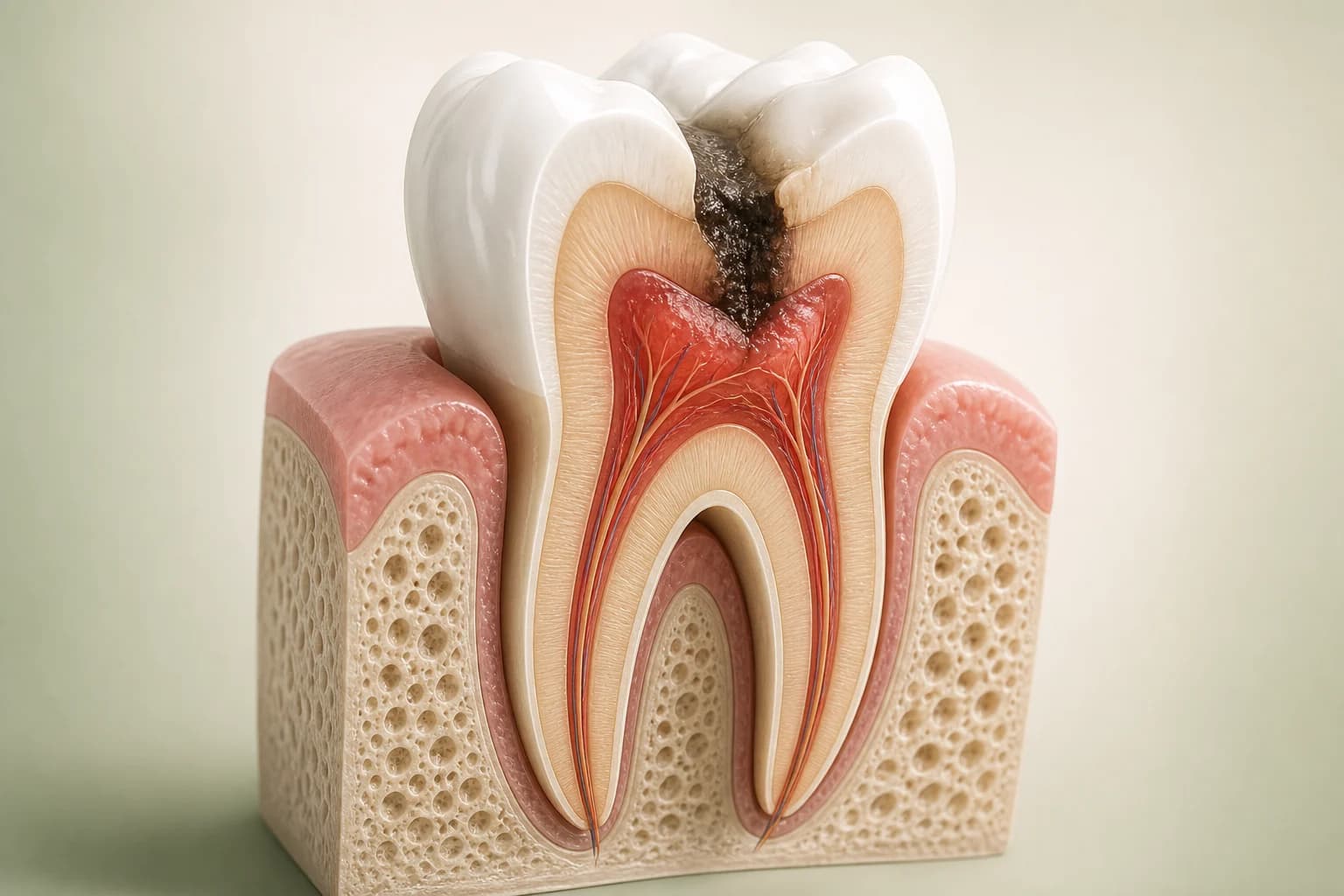
The decay has reached the nerve, but it's still alive. A strong, spontaneous pain appears, worse at night or with heat. We remove the inflamed nerve, disinfect the canal and seal it.
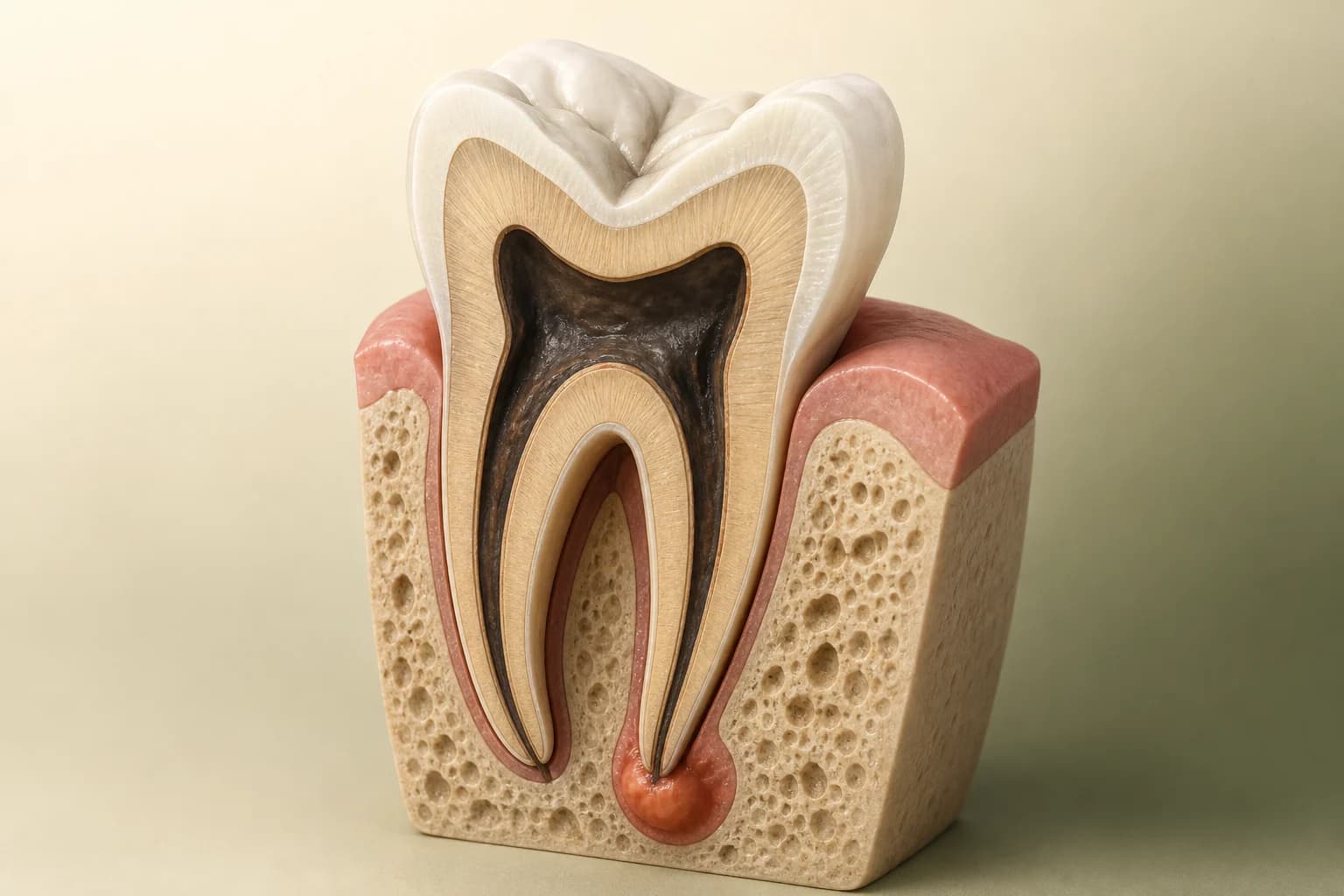
The nerve has died and infection has set in inside the canal. Sometimes the pain disappears for a while, which is misleading, but the infection advances towards the bone around the root. We clean and disinfect the canal thoroughly.
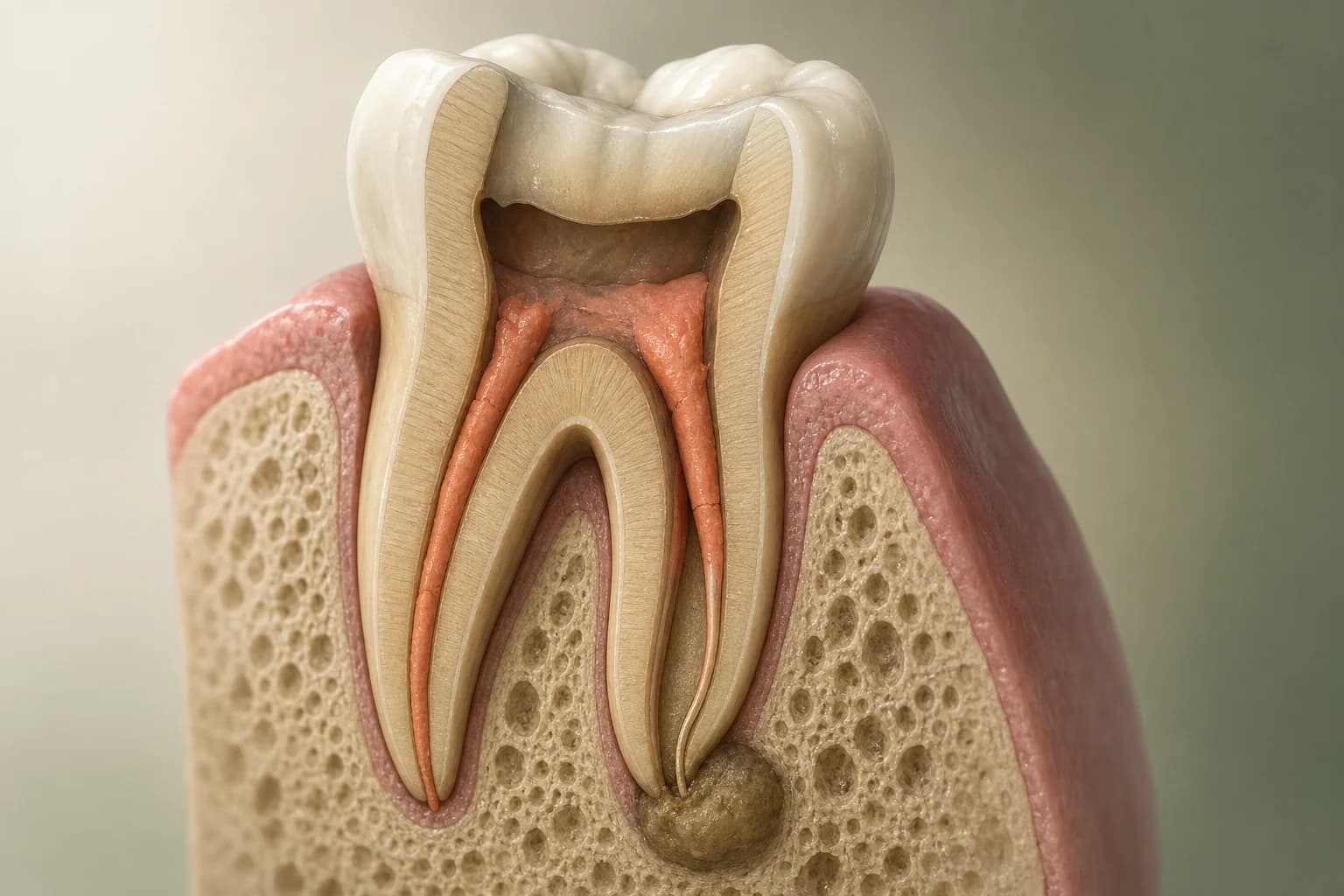
Sometimes a tooth treated years ago starts to hurt, or an infection appears at the root tip. In these cases the treatment can be redone: the old fillings are removed, the canal is cleaned again and sealed properly.
SIMPLE STEPS, NO RUSH
A root canal treatment is done under anaesthetic, in one or more sessions, depending on the state of the nerve and how many canals the tooth has. Here's exactly what happens, stage by stage.
We check the tooth, test its sensitivity and take an X-ray to see the canals and the state of the bone around the root. That's how we determine whether a root canal is needed and how complex the case is.
We numb the area locally before we start. From this point you feel no pain, this is where the part patients fear most begins, and it's actually the calmest.
We remove the decay and make a small opening through which we reach the canal. We isolate the tooth, so the working area stays clean and shielded from the bacteria in saliva.
We remove the affected nerve, clean the canal along its full length and disinfect it. This is the most important stage: how well the canal is cleaned determines the long-term success.
We fill the cleaned canal with a material that seals it completely, so bacteria can't return. We check on an X-ray that the seal reaches exactly to the root tip.
We rebuild the visible part of the tooth with a filling. If the tooth is left fragile, especially with molars, we recommend a crown to protect it from cracking.
The price depends on the state of the nerve and how many canals the treated tooth has. An incisor with a single canal is simpler than a molar with three or four. The consultation and X-ray are set out separately, in your written quote.
When the nerve is alive but inflamed. We remove the nerve, clean and seal the canal, then rebuild the tooth.
When the nerve has died and infection has set in. Cleaning and disinfecting the canal takes more care and, as a rule, more sessions.
Prices for the procedures that may come alongside a root canal treatment. Amounts vary from case to case; you'll get the exact figures in writing, in your quote.
An incisor usually has a single canal; a molar can have three or four. The more there are, the more time and precision the cleaning and sealing require.
A living nerve, merely inflamed, is simpler to treat than a dead one with infection set in. Cases with necrosis or gangrene need thorough disinfection and, as a rule, more sessions.
Some treatments finish in a single visit, others need two or more, with pauses for disinfection. The complexity of the case sets the pace.
Curved, narrow or calcified canals are harder to work through and need more care. We see this on the X-ray before we begin.
After a root canal, the tooth needs a filling and, sometimes, a crown to protect it from cracking. This stage is added to the cost of the treatment itself.
Follow-up X-rays, professional cleaning or gum treatment, when needed, all appear in the written quote, with no costs cropping up along the way.
A successful root canal shows years later, not on the day it's done. What matters is that every canal is found, cleaned along its full length and sealed right to the root tip, otherwise the infection returns, and the tooth has to be retreated or, worse, removed.
We work under anaesthetic, with X-ray checks along the way, and explain in advance how many sessions are needed, what comes afterwards and what it costs. No rush, no surprises.
When a tooth's nerve is affected, you have two options: treat it and keep it, or have it removed. The comparison below is for guidance, we make the decision together, after the examination and X-ray.
Keeping the natural tooth is usually the first option, but not always possible. When the tooth is too damaged or the root is compromised, extraction remains the right solution. We determine this at the consultation.
No. It's done under local anaesthetic, so you feel no pain during the procedure, for many patients it's comparable to having a filling. The pain people fear comes from the infected tooth, not from the treatment. The treatment is precisely what stops it.
A root canal treatment starts from 300 RON, depending on the state of the nerve and how many canals the tooth has. Rebuilding the tooth and, sometimes, a crown are added to this. The consultation is free, and you learn the exact cost after the examination and X-ray.
A session usually takes between 45 and 90 minutes, depending on the tooth. Some cases finish in a single visit, others need two or more, especially when the nerve is infected. We tell you from the start what to expect.
Because your own natural tooth is still the best one. Once removed, a gap appears that over time causes the neighbouring teeth to tilt and the bone to recede, and replacing it with an implant or a bridge costs considerably more than treating the canal.
A tooth treated properly and rebuilt in good time can last many years, sometimes a lifetime. What matters is that the canal is sealed completely, the tooth is rebuilt with a filling or a crown, and you keep up good hygiene with regular check-ups.
Sometimes, yes, especially if the nerve had already died before treatment. It's a change that can be corrected, through internal whitening or with a crown, when the tooth shows in your smile. We discuss the options if it comes up.
Not always. It depends on how much of the tooth is left. On molars, which take the greatest bite force, a crown is often recommended to prevent cracking. On front teeth, a well-made filling can be enough.
Mild sensitivity for a few days is normal, especially when biting, the tooth has been inflamed. It settles with the recommended medication. If the pain is severe, persists, or swelling appears, call us: we'll check the tooth without waiting for your next appointment.
Yes, but wait for the anaesthetic to wear off, so you don't bite your cheek or tongue. If the tooth only has a temporary filling between sessions, avoid chewing hard or sticky food on that side until we place the final restoration.
After root canal treatment, the tooth may need rebuilding and protection. Every stage appears separately in your plan.
Call for a free consultation and receive a written treatment plan with all costs included.